Menopause hair loss
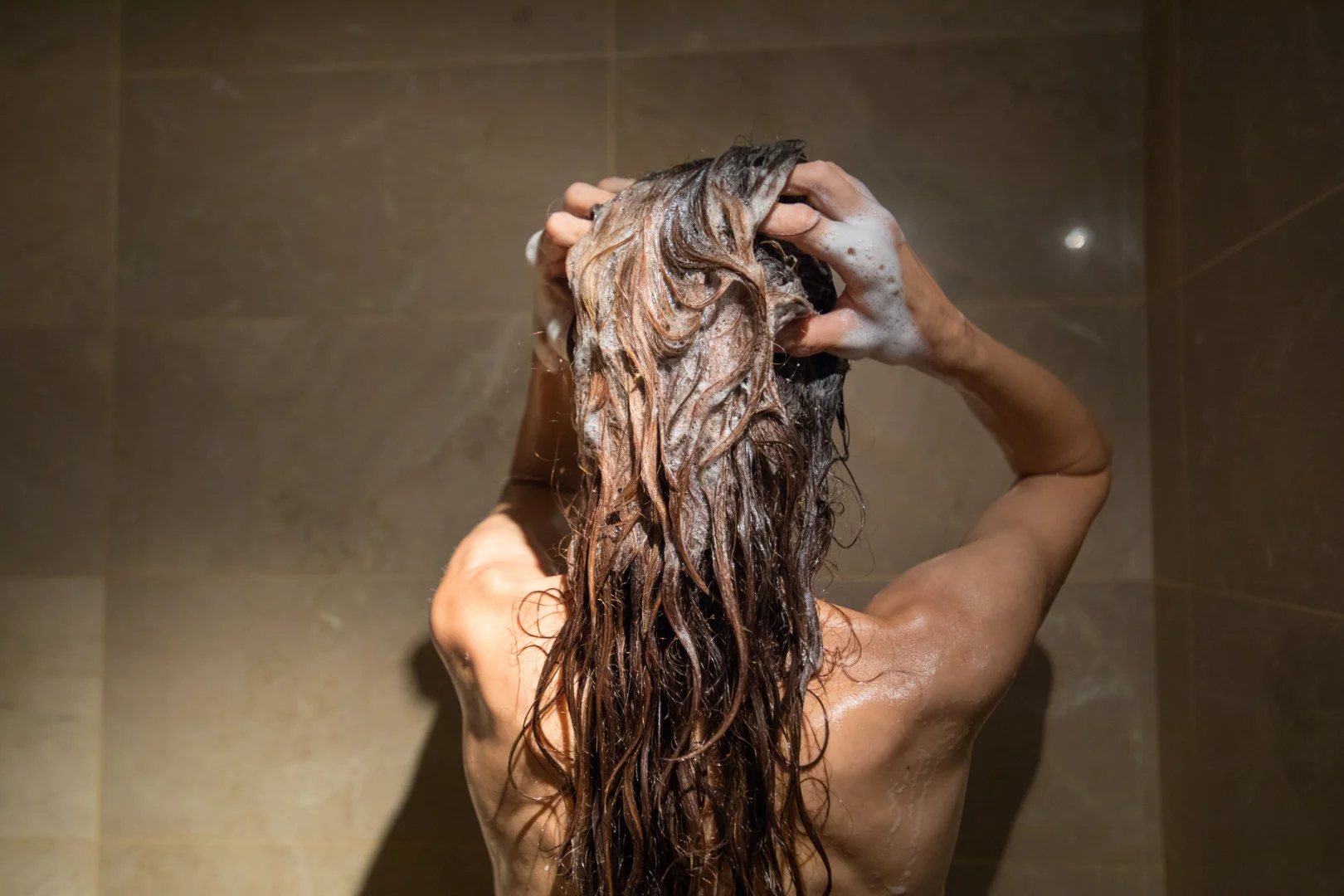
Hair thinning is one of the most common, and most under-discussed, symptoms of menopause. It is driven by shifting hormones, not something you are doing wrong, and there are prescription haircare treatments that can be effective to control this.
Answer a few questions to find your prescription topical hair treatment.
Understanding menopause hair loss
-
Common causes of menopause hair loss
Hormonal changes — Falling oestrogen and relatively steady androgen levels can shift hair follicles into a shorter growth cycle, leading to thinning, particularly at the crown and parting.
Female pattern hair loss (FPHL) — The most common cause of hair loss in women, involving progressive miniaturisation of hair follicles. It becomes more common with age and time since menopause.
Telogen effluvium — A temporary, more diffuse shedding that can be triggered by hormonal shifts, stress or illness around the menopause transition.
-
Symptoms to look out for
- Gradual thinning at the crown or parting
- Reduced hair volume or density
- Increased shedding when washing or brushing
- Visible scalp through thinning areas
- Finer, less thick-feeling hair over time
-
How is menopause hair loss treated?
We offer topical treatments only, applied directly to the scalp rather than taken as tablets.
Minoxidil — The ingredient with the strongest clinical evidence for female hair loss. It prolongs the hair growth phase and increases follicle size, improving density with consistent use.
Finasteride — Blocks the conversion of testosterone to DHT, a hormone linked to follicle miniaturisation. A postmenopausal-specific study found topical finasteride outperformed topical oestrogen for hair regrowth, and it is commonly combined with minoxidil.
Adenosine — Increases the proportion of thick, healthy hairs and prolongs the growth phase. Clinical trials in women with female pattern hair loss showed adenosine significantly increased both anagen (growing-phase) hair and thick hair ratio compared to placebo.
Melatonin — An antioxidant that supports hair follicle health. Several clinical studies show topical melatonin can improve hair density and prolong the growth phase, with good tolerability.
Cetirizine — An antihistamine shown in trials to improve hair density and reduce hair loss severity, making it a useful option for those who do not tolerate minoxidil well.
Niacinamide — Supports scalp health and calms inflammation, helping create the right environment for hair growth.
Panthenol (pro-vitamin B5) — Strengthens hair strands and supports the scalp barrier, improving overall hair and scalp condition.
A prescriber reviews your answers to find the right treatment for your hair and scalp.
-
How to get the best results from my treatment
- Be patient; hair growth is slow and most people need 4–6 months of consistent use to see visible change
- Use it exactly as directed; inconsistent use is one of the most common reasons treatment does not work
- Expect some initial shedding; this is common in the first 4–6 weeks as hair cycles reset, and usually settles
- Address other factors too; iron levels, thyroid function and stress can all affect hair alongside hormonal changes
- Do not stop abruptly; hair loss treatments generally need ongoing use to maintain results
-
When should I see a dermatologist instead?
We offer topical prescription treatments only. See a dermatologist or GP if:
- Your hair loss is sudden, patchy, or in distinct bald spots rather than gradual thinning
- You notice scalp scarring, redness or scaling alongside hair loss
- You have signs of an underlying condition, such as significant fatigue, weight change or irregular periods, that could point to a thyroid or hormonal cause
- Your hair loss is not improving after a reasonable course of treatment
- You would prefer a confirmed diagnosis rather than treatment based on your symptoms alone
Find your prescription haircare today

Answer a few questions
Tell us about your hair, scalp and goals in a short online assessment.

A prescriber reviews your answers
A prescriber reviews your responses and recommends the right topical treatment for you.
Start your routine
Your prescription haircare is delivered, with guidance on using it for the best results.
Answer a few questions
Tell us about your hair, scalp and goals in a short online assessment.
A prescriber reviews your answers
A prescriber reviews your responses and recommends the right topical treatment for you.
Start your routine
Your prescription haircare is delivered, with guidance on using it for the best results.
